Product Problems Series
Product Problems Series
Product Problems Series
The Authority Trap: Accountability Without The Control
Empowerment is a must to allow product teams to succeed. Too many checks and balances throw off timing and outcomes.

Brandon Green
Feb 7, 2026

This is Part 2 of a series on why product teams are struggling. Part 1, "Why Product Teams Feel Stuck," looked at the systemic problems: unclear strategy, skipped discovery, and the feature factory grind. This piece goes deeper into the power dynamic that keeps those problems in place.
Here's the situation: 92% of product leaders now own revenue outcomes. That number has more than doubled in a few years. PMs are suddenly responsible for business results while lacking the authority to achieve them. You're measured on revenue but you can't set pricing or control go-to-market. Sales comp plans and marketing budgets are someone else's call.
You own the outcome but don't control the inputs. There is no empowerment there.
This is Part 2 of a series on why product teams are struggling. Part 1, "Why Product Teams Feel Stuck," looked at the systemic problems: unclear strategy, skipped discovery, and the feature factory grind. This piece goes deeper into the power dynamic that keeps those problems in place.
Here's the situation: 92% of product leaders now own revenue outcomes. That number has more than doubled in a few years. PMs are suddenly responsible for business results while lacking the authority to achieve them. You're measured on revenue but you can't set pricing or control go-to-market. Sales comp plans and marketing budgets are someone else's call.
You own the outcome but don't control the inputs. There is no empowerment there.
The empowerment illusion
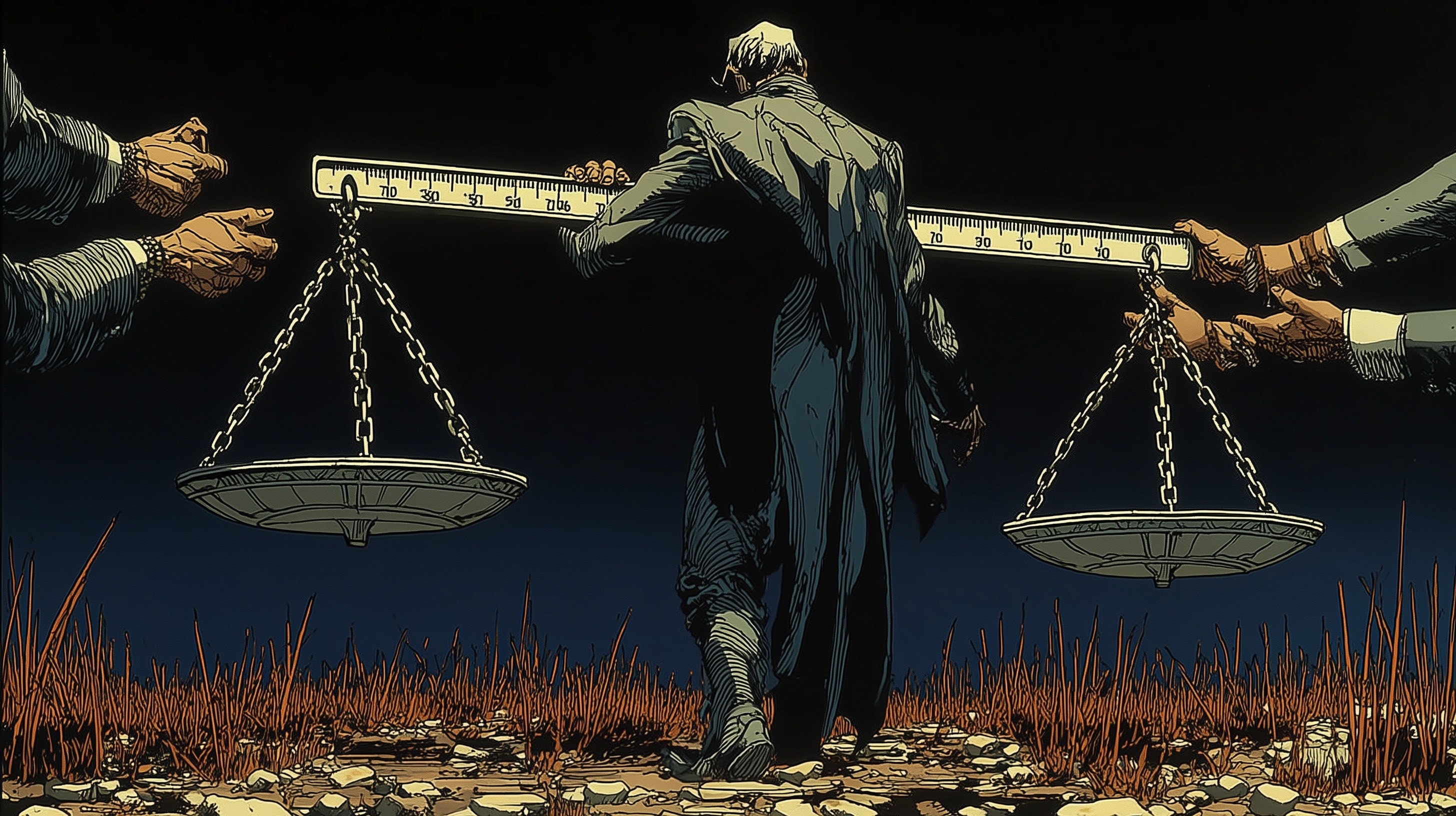
85% of product professionals say they have a seat at the strategic table. But having a seat and having influence are different things.
I've watched or been told about this pattern repeating across multiple companies. Strategy gets determined in closed-door meetings. Priorities get set without input from the people who actually understand the users. Then the decisions get handed down as if they are "alignment." If you disagree with the predetermined solution, you're labeled "not aligned." It doesn't mean we agree on direction, it means you'll execute what we decided without pushing back.
2025 data shows a 5% increase in senior leadership deciding product strategy. Organizations that spent years pushing decision-making down are now pulling it back up under economic pressure. The empowerment gains of the last decade are eroding at a high rate.
Real empowerment means teams can make consequential decisions without escalation. What most teams experience is closer to order-taking with extra meetings. You're must execute orders you disagreed with. The approval gates stay in place for every decision. Nothing moves without sign-off, and the bottleneck becomes the org chart itself.
Over time, learned helplessness starts to set in. Why push back if it never changes anything? Why advocate for users when the roadmap is already locked? Teams stop trying to improve things because they've learned that trying doesn't work. Then leadership wonders why product seems so passive and disengaged.
The empowerment illusion
85% of product professionals say they have a seat at the strategic table. But having a seat and having influence are different things.
I've watched or been told about this pattern repeating across multiple companies. Strategy gets determined in closed-door meetings. Priorities get set without input from the people who actually understand the users. Then the decisions get handed down as if they are "alignment." If you disagree with the predetermined solution, you're labeled "not aligned." It doesn't mean we agree on direction, it means you'll execute what we decided without pushing back.
2025 data shows a 5% increase in senior leadership deciding product strategy. Organizations that spent years pushing decision-making down are now pulling it back up under economic pressure. The empowerment gains of the last decade are eroding at a high rate.
Real empowerment means teams can make consequential decisions without escalation. What most teams experience is closer to order-taking with extra meetings. You're must execute orders you disagreed with. The approval gates stay in place for every decision. Nothing moves without sign-off, and the bottleneck becomes the org chart itself.
Over time, learned helplessness starts to set in. Why push back if it never changes anything? Why advocate for users when the roadmap is already locked? Teams stop trying to improve things because they've learned that trying doesn't work. Then leadership wonders why product seems so passive and disengaged.

Revenue ownership without revenue authority
The revenue accountability shift is driven by economic pressure. After years of "growth at all costs," investors now demand profitability. Product teams became the scapegoat. "We're not hitting numbers, product needs to drive revenue."
But transferring accountability without the authority just creates frustration and conflict. Sales gets paid on closed deals, even deals that require custom development. Marketing wants features that look good in demos. Customer success wants every customer happy. Product gets measured on profitability, which conflicts with all three. Everyone says they want "what's best for the product" but they're measured on different things. These goals aren't compatible is they are somebody else's metric to lose.
The PM sits in the middle, responsible for the roadmap but lacking authority to enforce it. You can't tell sales "no" when they outrank you. You can't ignore the executive who controls your budget. So you become a diplomat, negotiator, and the company scapegoat. PMs report spending 60% of their time managing stakeholder expectations instead of building product.
They are no longer doing product management, instead it’s more like traffic control.
When features ship and revenue targets still get missed? Product takes the blame. Nobody seems to ask whether pricing was wrong, whether sales couldn't close, whether marketing positioned the product poorly. The team that built a good product gets blamed for outcomes they were never equipped to influence.
What this costs
When you spend all day negotiating between competing demands, discovery doesn't happen. Strategy doesn't get built. Nobody's thinking about users or the future. The PM role collapses from product strategist into project manager.
The roadmap becomes incoherent. Every stakeholder gets a little of what they want, nobody gets what they actually need. The product becomes a collection of half-baked features that don't add up to a coherent experience. Priorities shift weekly based on who spoke loudest, and teams stop trusting that the roadmap means anything.
Senior product people don't stay in environments where their judgment is consistently ignored. Instead they leave to the next best offer that comes along. Google's Project Aristotle found that teams with autonomy and psychological safety dramatically outperform those without, regardless of individual talent. Organizations that strip autonomy lose their best people first and keep the ones willing to just follow orders.
Revenue ownership without revenue authority
The revenue accountability shift is driven by economic pressure. After years of "growth at all costs," investors now demand profitability. Product teams became the scapegoat. "We're not hitting numbers, product needs to drive revenue."
But transferring accountability without the authority just creates frustration and conflict. Sales gets paid on closed deals, even deals that require custom development. Marketing wants features that look good in demos. Customer success wants every customer happy. Product gets measured on profitability, which conflicts with all three. Everyone says they want "what's best for the product" but they're measured on different things. These goals aren't compatible is they are somebody else's metric to lose.
The PM sits in the middle, responsible for the roadmap but lacking authority to enforce it. You can't tell sales "no" when they outrank you. You can't ignore the executive who controls your budget. So you become a diplomat, negotiator, and the company scapegoat. PMs report spending 60% of their time managing stakeholder expectations instead of building product.
They are no longer doing product management, instead it’s more like traffic control.
When features ship and revenue targets still get missed? Product takes the blame. Nobody seems to ask whether pricing was wrong, whether sales couldn't close, whether marketing positioned the product poorly. The team that built a good product gets blamed for outcomes they were never equipped to influence.
What this costs
When you spend all day negotiating between competing demands, discovery doesn't happen. Strategy doesn't get built. Nobody's thinking about users or the future. The PM role collapses from product strategist into project manager.
The roadmap becomes incoherent. Every stakeholder gets a little of what they want, nobody gets what they actually need. The product becomes a collection of half-baked features that don't add up to a coherent experience. Priorities shift weekly based on who spoke loudest, and teams stop trusting that the roadmap means anything.
Senior product people don't stay in environments where their judgment is consistently ignored. Instead they leave to the next best offer that comes along. Google's Project Aristotle found that teams with autonomy and psychological safety dramatically outperform those without, regardless of individual talent. Organizations that strip autonomy lose their best people first and keep the ones willing to just follow orders.
What to do about it
Clarify what product actually owns
There's a difference between things product controls and things product influences. Product controls what gets built, product quality, and user experience. Product influences but doesn't control pricing, sales effectiveness, go-to-market strategy, and market conditions. If you're being held accountable for revenue, reframe the conversation: "Product owns building something that creates value for customers and enables the business to capture that value. Revenue is a shared outcome." Saying this out loud, even if you feel it’s obvious, matters.
Separate leading indicators from revenue
Revenue is a lagging indicator. By the time it moves, it's too late to course-correct. Identify what product actually controls that predicts revenue: activation rate, feature adoption, user retention, expansion signals. Show the correlation. "When activation rate increases 10%, revenue grows 8% the following quarter." Now you're measured on something you can influence AND the company will respect.
Make stakeholders do the tradeoff work
Stakeholders want everything, right now. So you have to make them choose. Show current capacity and current commitments. "Adding your feature means removing something. What should we remove?" When someone says their thing is urgent, ask what should be deprioritized and what the business impact of that delay looks like. Force the cost to be visible. Most stakeholders back down when they have to own the tradeoff instead of just making the request.
Define decision rights explicitly
Document which decisions teams own outright and which require input or approval. Push decisions to the lowest appropriate level. When leadership overrides a team decision, you document it. Make overrides visible and rare. "On this date, we decided X despite the team's recommendation of Y. Here's the reasons why." The paper trail creates accountability in both directions.
Create cross-functional revenue rituals
If revenue is a shared outcome, build shared processes. Monthly revenue retrospectives where product, sales, marketing, and leadership review what drove results and what blocked them. Shared OKRs with clear ownership: product owns activation and retention, sales owns pipeline and conversion, marketing owns lead quality. Everyone owns revenue growth together. Make these a common aspect of you MBR or/and QBRs.
When you're an IC without power
Most PMs can't renegotiate their accountability structure. But you can make the constraints visible. When you miss a revenue target, show what was outside your control. "Product enabled $6M in opportunity. Sales conversion was 40% against a 60% target." Focus on what you control: activation, adoption, retention, satisfaction. Build relationships across go-to-market. You can't control sales or marketing, but you can influence them through trust and partnership rather than org chart authority.
What to do about it
Clarify what product actually owns
There's a difference between things product controls and things product influences. Product controls what gets built, product quality, and user experience. Product influences but doesn't control pricing, sales effectiveness, go-to-market strategy, and market conditions. If you're being held accountable for revenue, reframe the conversation: "Product owns building something that creates value for customers and enables the business to capture that value. Revenue is a shared outcome." Saying this out loud, even if you feel it’s obvious, matters.
Separate leading indicators from revenue
Revenue is a lagging indicator. By the time it moves, it's too late to course-correct. Identify what product actually controls that predicts revenue: activation rate, feature adoption, user retention, expansion signals. Show the correlation. "When activation rate increases 10%, revenue grows 8% the following quarter." Now you're measured on something you can influence AND the company will respect.
Make stakeholders do the tradeoff work
Stakeholders want everything, right now. So you have to make them choose. Show current capacity and current commitments. "Adding your feature means removing something. What should we remove?" When someone says their thing is urgent, ask what should be deprioritized and what the business impact of that delay looks like. Force the cost to be visible. Most stakeholders back down when they have to own the tradeoff instead of just making the request.
Define decision rights explicitly
Document which decisions teams own outright and which require input or approval. Push decisions to the lowest appropriate level. When leadership overrides a team decision, you document it. Make overrides visible and rare. "On this date, we decided X despite the team's recommendation of Y. Here's the reasons why." The paper trail creates accountability in both directions.
Create cross-functional revenue rituals
If revenue is a shared outcome, build shared processes. Monthly revenue retrospectives where product, sales, marketing, and leadership review what drove results and what blocked them. Shared OKRs with clear ownership: product owns activation and retention, sales owns pipeline and conversion, marketing owns lead quality. Everyone owns revenue growth together. Make these a common aspect of you MBR or/and QBRs.
When you're an IC without power
Most PMs can't renegotiate their accountability structure. But you can make the constraints visible. When you miss a revenue target, show what was outside your control. "Product enabled $6M in opportunity. Sales conversion was 40% against a 60% target." Focus on what you control: activation, adoption, retention, satisfaction. Build relationships across go-to-market. You can't control sales or marketing, but you can influence them through trust and partnership rather than org chart authority.

The part that isn't fixable from your level
Some of this is fixable, other times you just need to choose the battles you are willing to fight. Pushing for clearer decision rights, separating leading indicators from revenue, making tradeoffs visible. These are things you can start doing next week…right?
But the underlying dynamic is structural. Organizations assign revenue accountability to product because it's easier than fixing misaligned incentives across sales, marketing, and product. It's easier to blame one team than to admit the whole system needs redesigning.
If you're spending 60% of your time managing stakeholders and the roadmap changes monthly and leadership overrides your decisions routinely, that's not a skills gap. You can build coalitions, document everything, and escalate strategically. But if the power dynamic is fundamentally rigged, the best stakeholder management in the world won't fix it.
At some point, the question shifts from "how do I manage this?" to "is this manageable at all?"
The part that isn't fixable from your level
Some of this is fixable, other times you just need to choose the battles you are willing to fight. Pushing for clearer decision rights, separating leading indicators from revenue, making tradeoffs visible. These are things you can start doing next week…right?
But the underlying dynamic is structural. Organizations assign revenue accountability to product because it's easier than fixing misaligned incentives across sales, marketing, and product. It's easier to blame one team than to admit the whole system needs redesigning.
If you're spending 60% of your time managing stakeholders and the roadmap changes monthly and leadership overrides your decisions routinely, that's not a skills gap. You can build coalitions, document everything, and escalate strategically. But if the power dynamic is fundamentally rigged, the best stakeholder management in the world won't fix it.
At some point, the question shifts from "how do I manage this?" to "is this manageable at all?"
References
Airtable, 2025 Predictions for Product Teams Report. "92% of product leaders now own revenue outcomes." airtable.com/articles/product/product-management-trends
Atlassian, The State of Product in 2026. "85% say they have a seat at the strategic table." atlassian.com/blog/announcements/state-of-product-2026
ProductPlan, 2025 State of Product Management Report. "5% increase in senior leadership deciding product strategy." Referenced in Ant Murphy, "How Product is Changing in 2026." antmurphy.medium.com/how-product-is-changing-in-2026
Pragmatic Institute, 2019 Annual Product Management and Product Marketing Survey. PMs reported spending 73% of time on tactical activities vs. 27% on strategic work. pendo.io/pendo-blog/tactical-vs-strategic-where-product-managers-really-spent-their-time-in-2019
Google, Project Aristotle (2015). Teams with autonomy and psychological safety outperform regardless of individual talent. rework.withgoogle.com
MORE INSIGHTS

Career Advice
Feb 3, 2026
Product teams are changing and not for the better. Companies want results faster and that means skipping key steps in the process.
Why Product Teams Feel Stuck

Career Advice
Jan 27, 2026
Most companies say they want a senior designer. They actually want fast executors.
Companies Have Started Hiring for Speed, Not Strategy