StoryThreads
Role
Sole founder handling research, product strategy, UX design, visual design, and business planning.
Scenario
People capture experiences constantly through photos. Most of those photos stay as disconnected fragments instead of becoming stories with context and meaning.
Goals
Explore how a product could help people turn raw photos into narratives through structure, flow design, and system thinking.
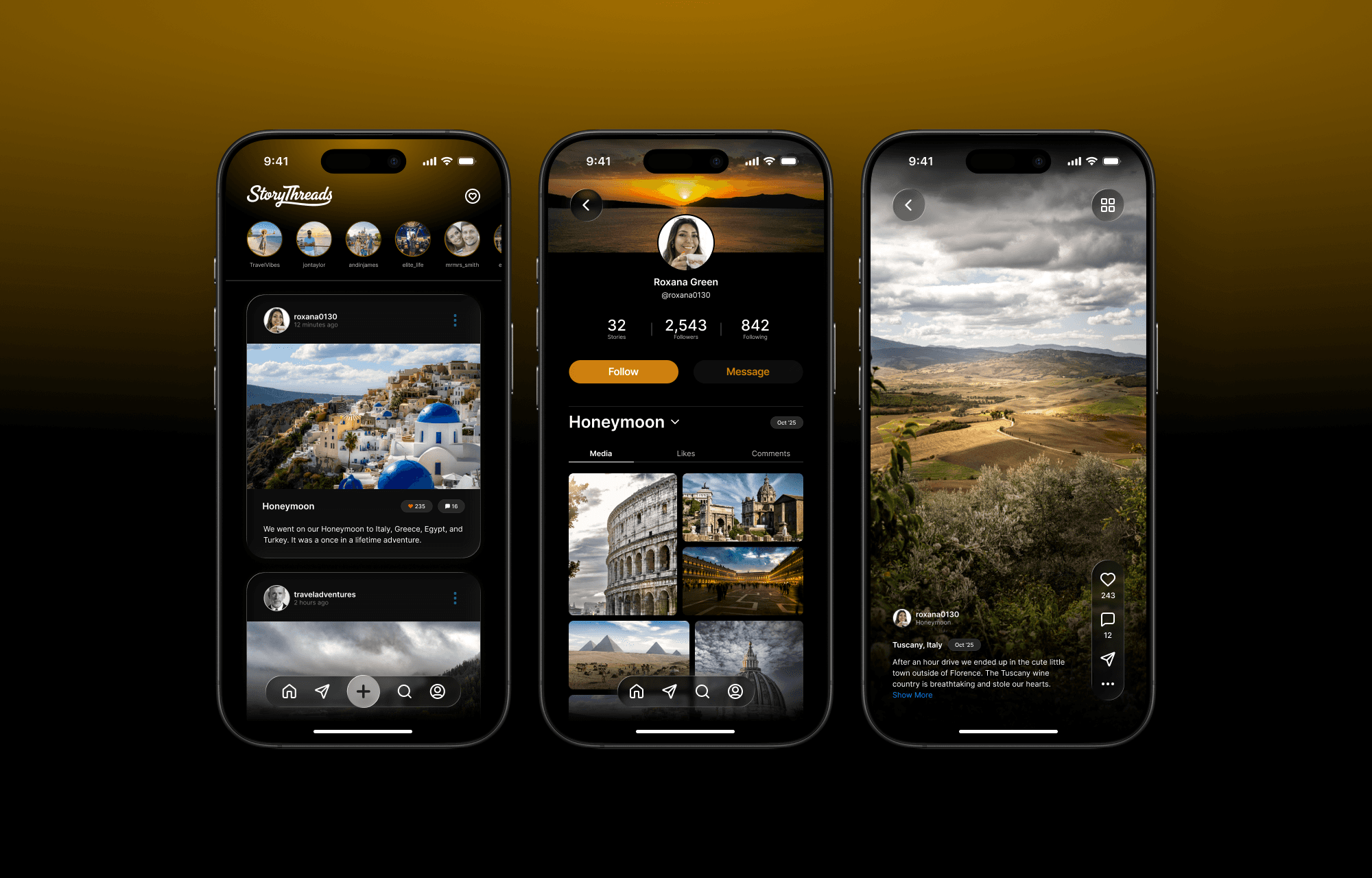
Photos pile up without context, leaving people with archives of moments instead of meaningful stories.
Photos accumulate by the hundreds or thousands, but they remain fragmented. While individual images capture moments, they rarely convey the broader context, emotion, or sequence that turns moments into stories.
Existing tools are good at:
Storing photos
Sorting by date or location
Sharing individual highlights
They are not good at:
Helping people express meaning
Connecting moments into narratives
Supporting reflection or storytelling over time
The result is a growing archive of disconnected memories with little structure or story.
An exploratory project balancing uncertainty, subjectivity, and personal constraints.
This project comes with real constraints:
No validated market yet
This work focuses on understanding the problem deeply before committing to a specific solution.
Highly subjective user needs
Storytelling, memory, and meaning vary widely from person to person.
Balancing structure with creativity
Too much structure kills expression; too little makes narratives incoherent.
Personal scope and resources
As a solo project, decisions must balance ambition with feasibility.
These constraints shape how far the exploration goes and where it pauses.
Rather than starting with photo management, I reframed the problem around narrative creation.
The core question became:
How might a product help people connect moments into stories without forcing them into rigid templates?
Alongside UX exploration, I mapped potential business models to understand whether the concept could be viable beyond personal use.
This included:
Identifying potential user segments
Considering premium features tied to narrative depth
Evaluating where value might compound over time
Storythreads required thinking in systems rather than linear flows.
I've explored:
How moments might connect across time
How stories could branch, overlap, or evolve
How users might move between raw content and reflection
This led to early information architecture concepts focused on relationships rather than hierarchy.
System Thinking:
Conceptual models mapping moments, threads, and stories
Information architecture diagrams testing different organizing principles
Tradeoffs between chronological and thematic structures
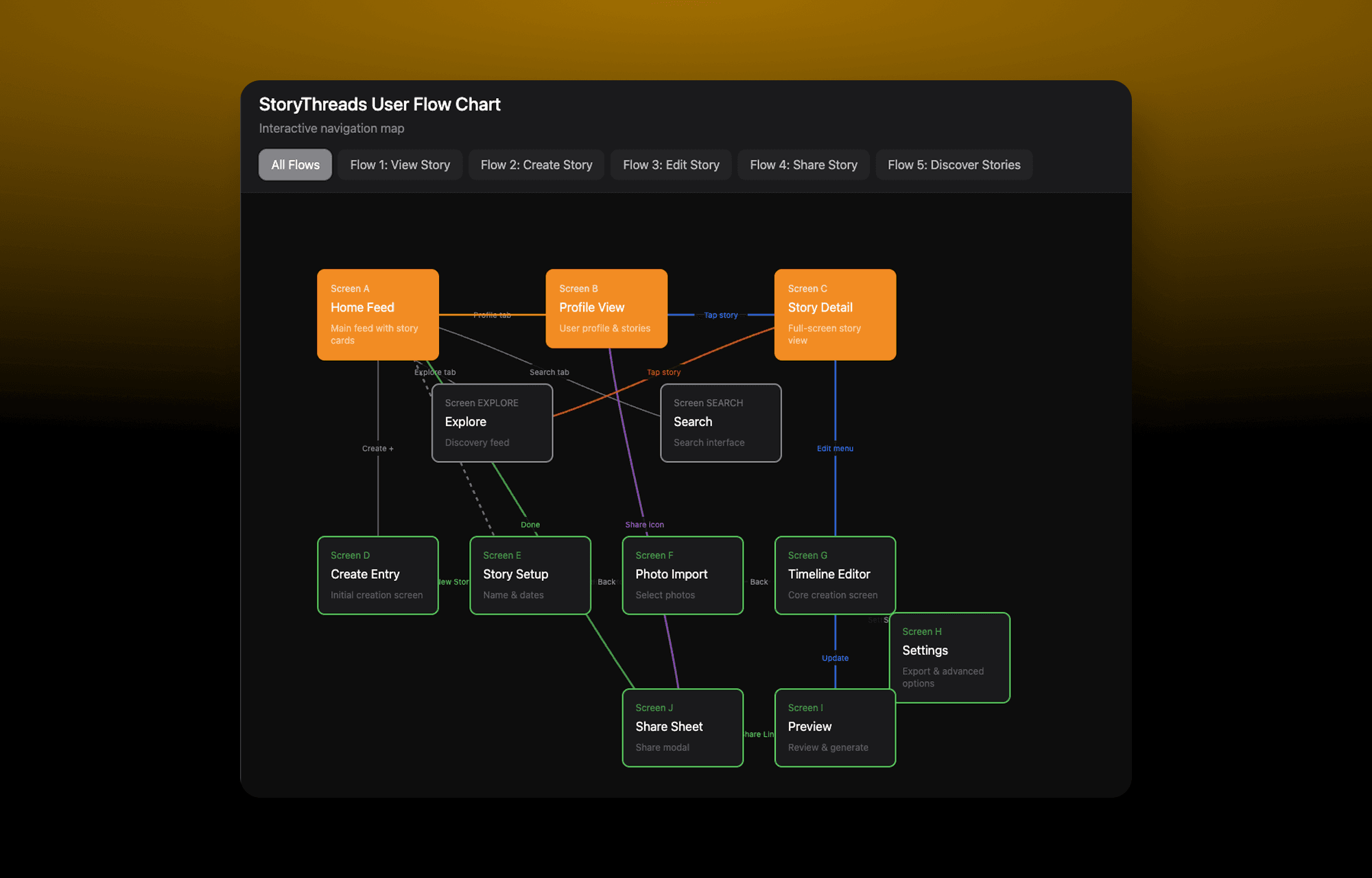
Instead of assuming how users would behave, I explored flows based on different mental models:
Capturing in the moment
Reflecting after the fact
Revisiting and reshaping stories over time
These flows helped surface where friction or confusion might occur before investing in visual design.
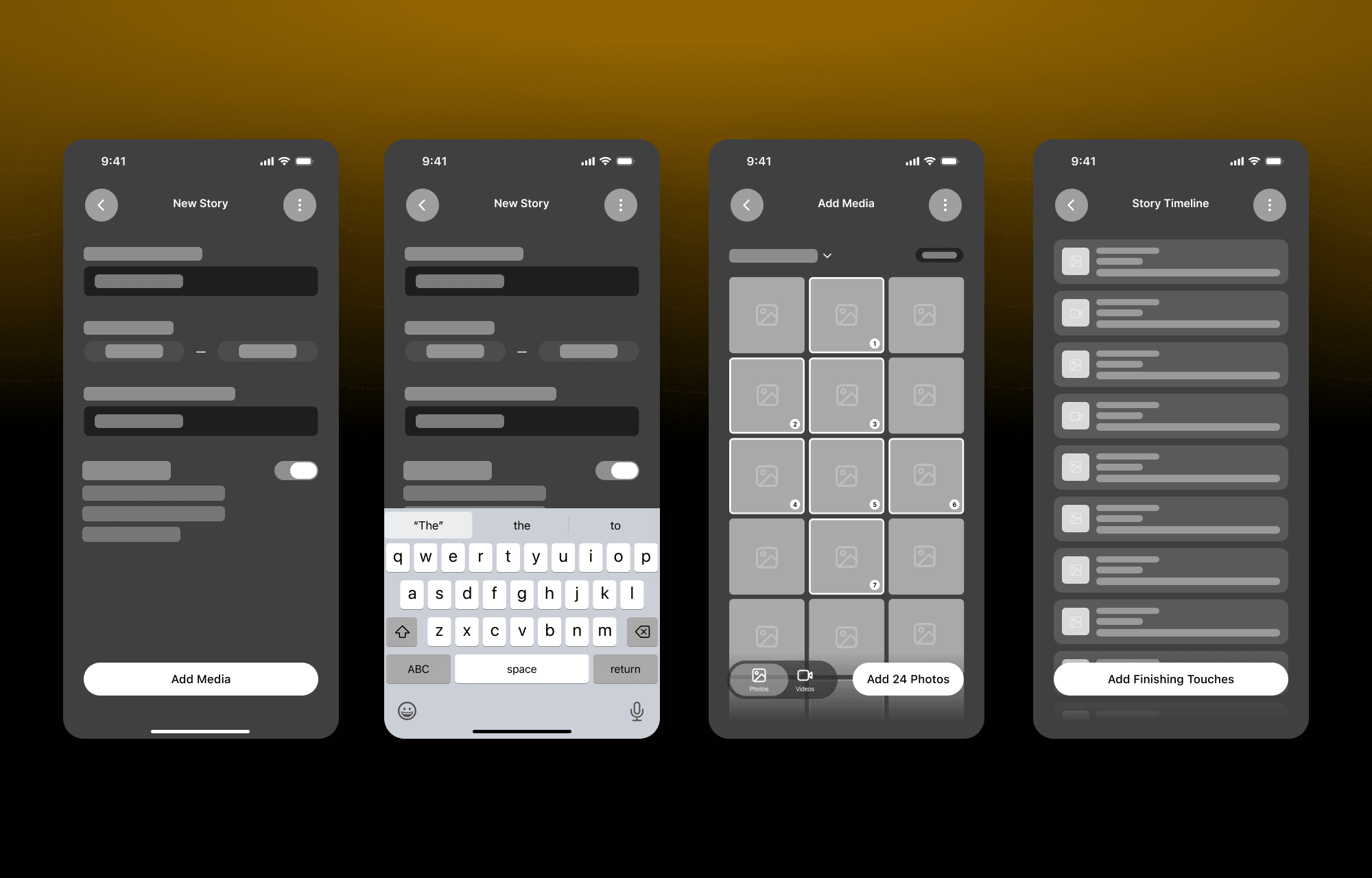
Flow exploration:
Entry points into storytelling
Transitions between photos and narrative
Points where structure should help rather than interrupt
Even at the concept stage, I explored design system principles to understand how the product could scale without becoming rigid.
The goal was consistency without constraining expression.
Design system considerations:
Components that support narrative rather than UI perfection
Visual hierarchy tuned for storytelling
Patterns that prioritize content over interface
People don’t need more places to store content; they need help making sense of it
Narrative tools must be adaptable to personal meaning, not prescriptive
Structure is necessary, but only when it stays out of the way
Designing for reflection is fundamentally different from designing for capture
What’s Still Open
How much structure users actually want versus discover over time
Where automation helps and where it interferes with expression
What moments are worth threading into stories
How to validate demand without over-building
These questions are intentionally unresolved and will guide next steps.
Storythreads is less about building an app and more about exploring how design can support meaning, memory, and narrative at scale.
For me, this project:
Sharpens product sense in ambiguous spaces
Exercises systems thinking without organizational scaffolding
Balances creativity with structure
Reinforces discipline around honest exploration before execution
It reflects how I approach new problems: start with the right question, design the system thoughtfully, and let evidence shape the path forward.
“

Valeriia Koltsova
Senior UX Researcher